[ designer & builder ]
unfolded:A story nobody wrote alone
A phone party game, built Hebrew-first and rewritten for English, where friends write one story together, a line at a time, each seeing only a fragment of what came before. I designed and built it in five days, with AI as my engineering partner, and changed it after every real game with friends.
Play the game ↗ (opens in a new tab) See the landing page ↗ (opens in a new tab)

The idea
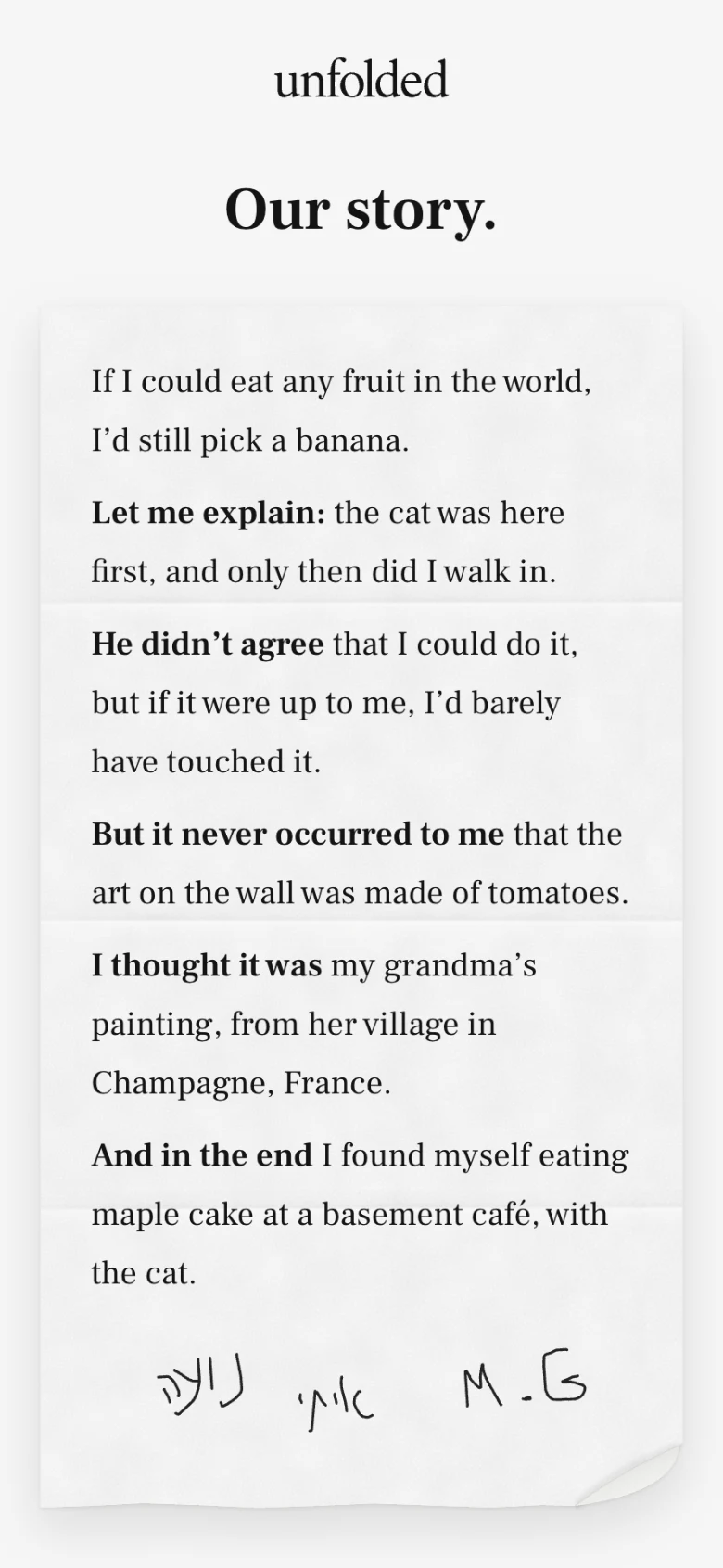
unfolded is a digital version of an old paper game: finish the sentence you were given, start a new one, then fold the paper so only your start shows, and pass it on. Everyone plays on their own phone, in the same room, with nothing to install. Only at the end is the whole story revealed, and read aloud.
It's Hebrew first, with an English version that's rewritten, not translated.
An old paper game, rebuilt for phones in one room: finish a sentence, start the next, fold so only the start shows.
Paper, physically
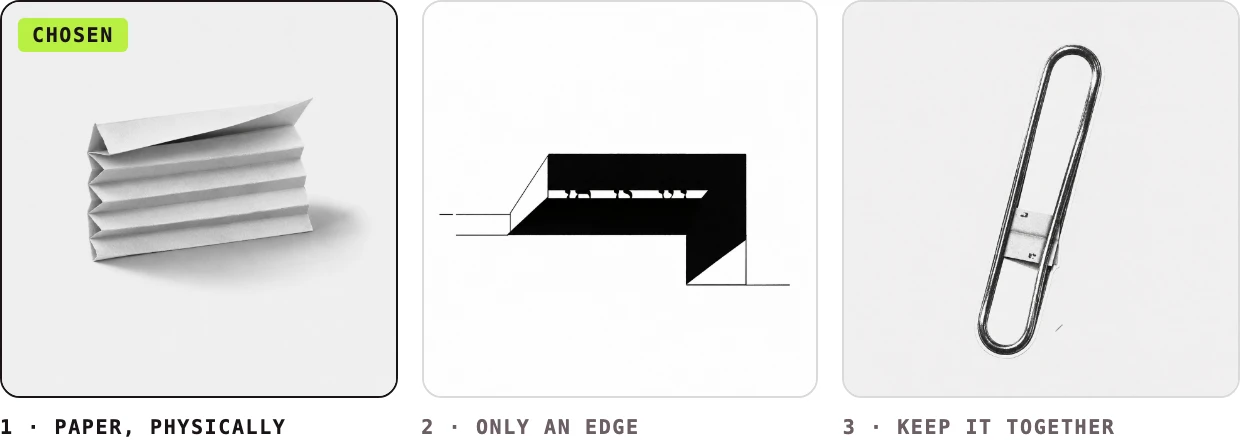
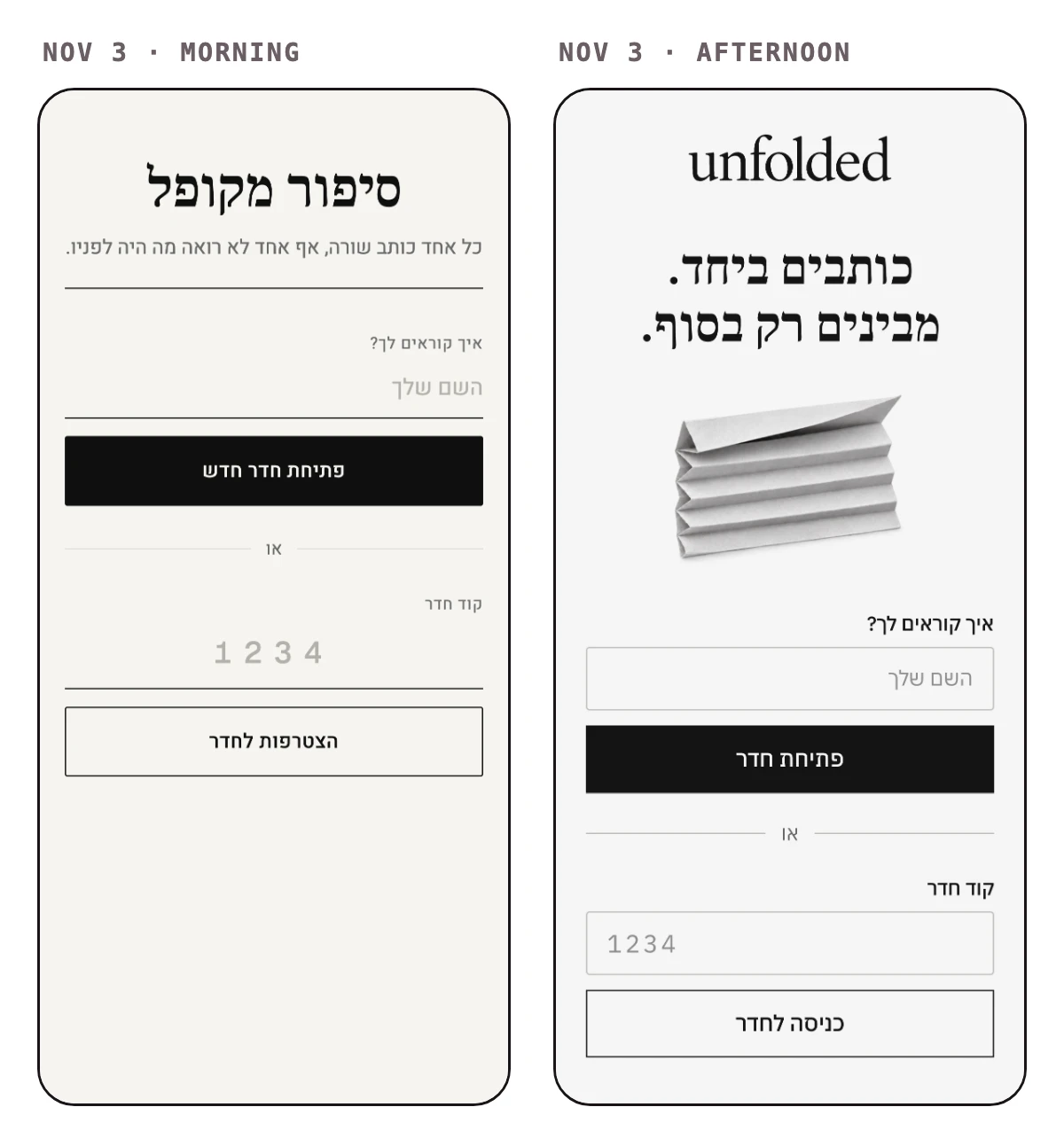
On day two I explored three art directions as AI-generated boards: Paper, physically, Only an edge and Keep it together. I picked the first, and it shaped everything after.
The same afternoon, the plain first screens took on the new look. A paper study from that board became the reference for the story sheet at the end: creases, a wavy edge, a lifted corner.
Three AI-generated art directions; I picked "Paper, physically", and the screens took on its look the same day.
One story, not many
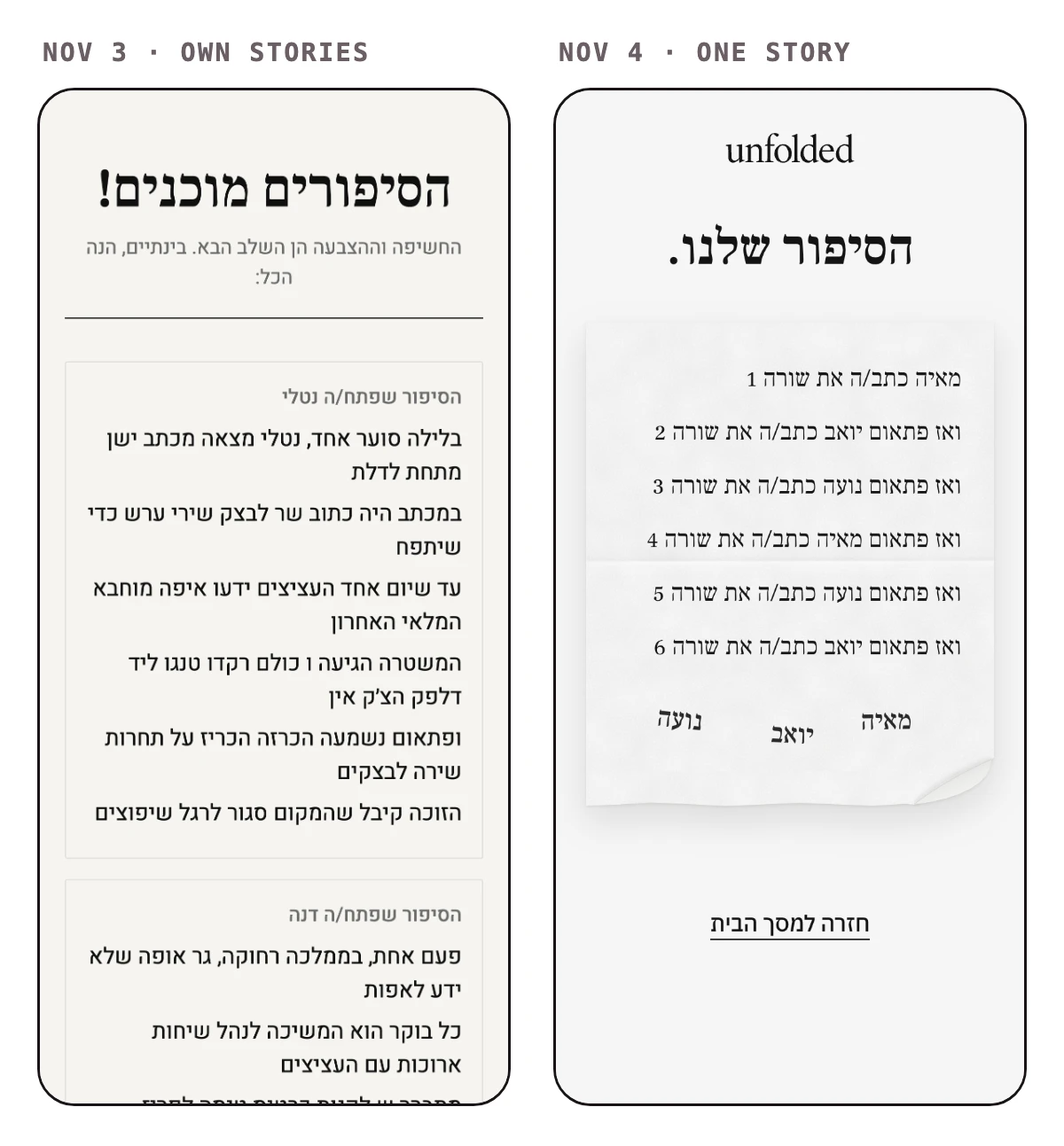
The first version had everyone writing their own story at the same time, with a reveal of all of them at the end and a vote planned after. Then a friend described the version she knew: one shared story, taking turns. I asked around, and most people knew that version, not mine.
My first instinct was the wow version: offer both, as two modes. But more choice would have been overwhelming, especially at a party, before anyone has played. Less was more, so I went lean: one simple mode, the one most people already know.
Most people knew a different version: one shared story. I thought about two modes, then went lean with the one everyone knows.
The fold
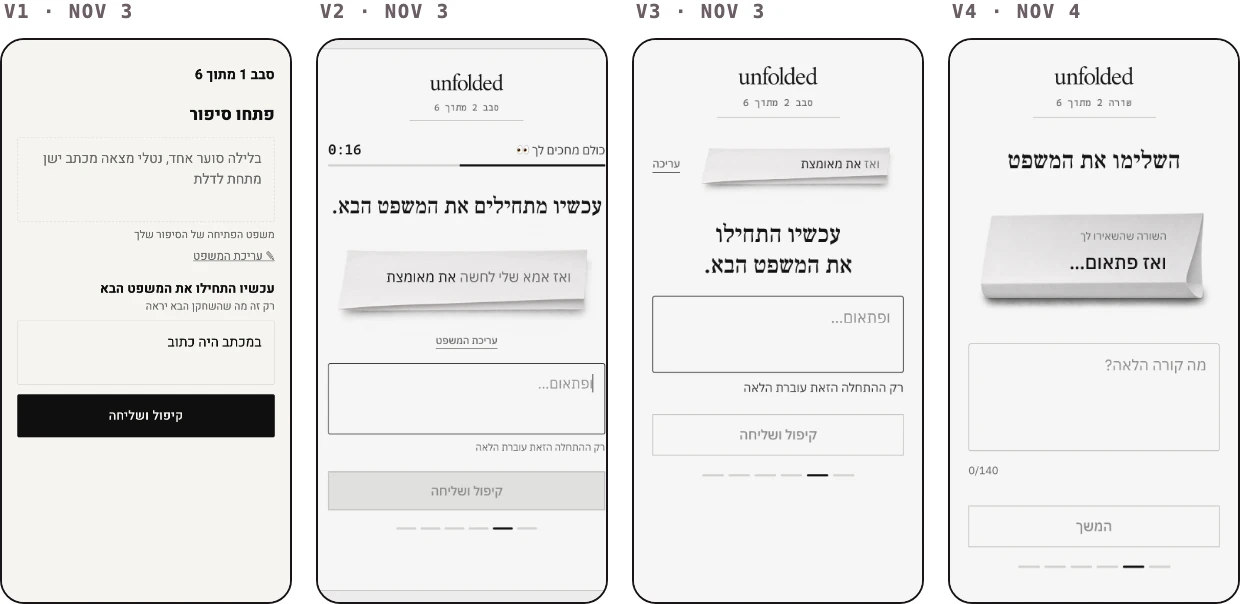
The writing screen went through five versions. Early on, finishing your sentence and starting the next one were two steps behind a "continue" button, and friends found it unclear.
The fix was to make the hiding physical. You tap "fold the page", the paper folds over your sentence and rolls up, and you write the next start on the blank half: the only part the next person will see. Pull the roll down to peek at what you wrote.
Two abstract steps became one physical gesture: write, fold, and only the start you leave goes on.
What real games changed
I was at every test game, so feedback was spoken and watched, not measured. Three changes came straight from it:
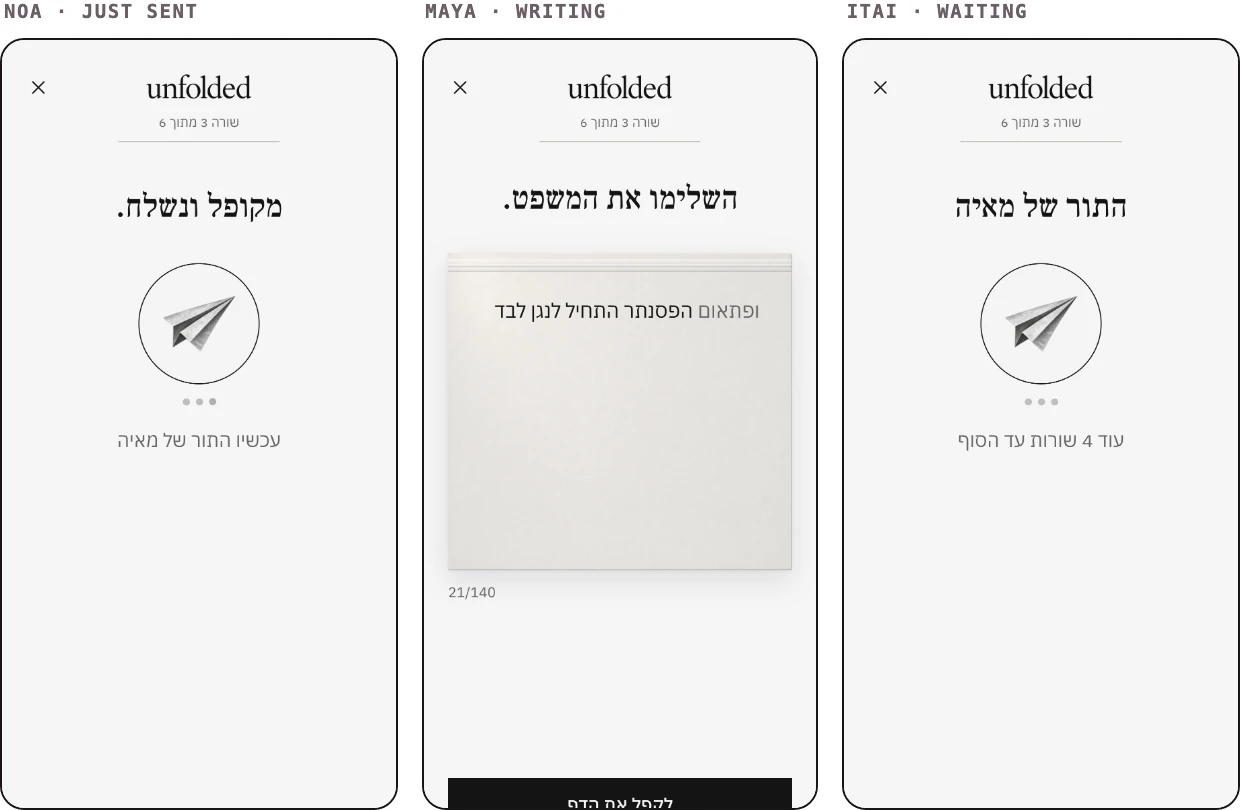
Waiting. A friend found the waiting screen too static. Now it shows the writer's avatar, with dots that pulse only while they type.
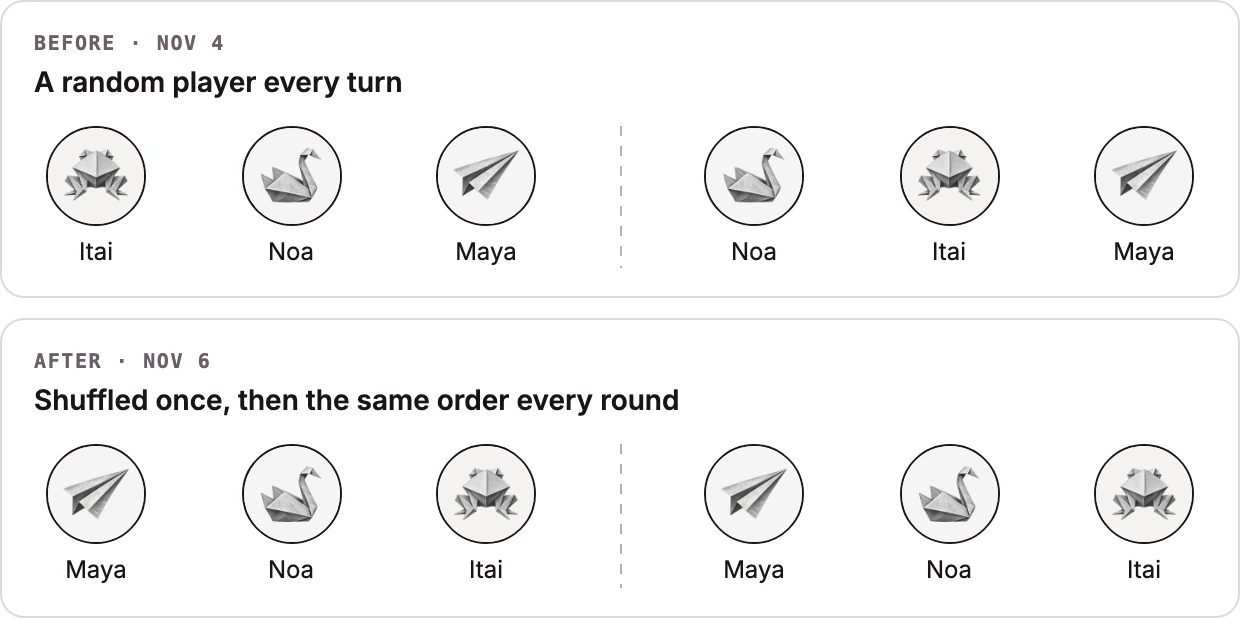
Turn order. Random turns felt like a mistake. Now the order is shuffled once, then stays the same; only who starts is a surprise.
Time. In a 3-player game, one player felt rushed. Turns went from 2 minutes to 3, plus a fresh 2 after folding. The rule I kept: it should be fun for everyone, so time shouldn't be tight.
Waiting got a pulse, turns got a fixed order, and writers got more time.
The reveal, and keeping it
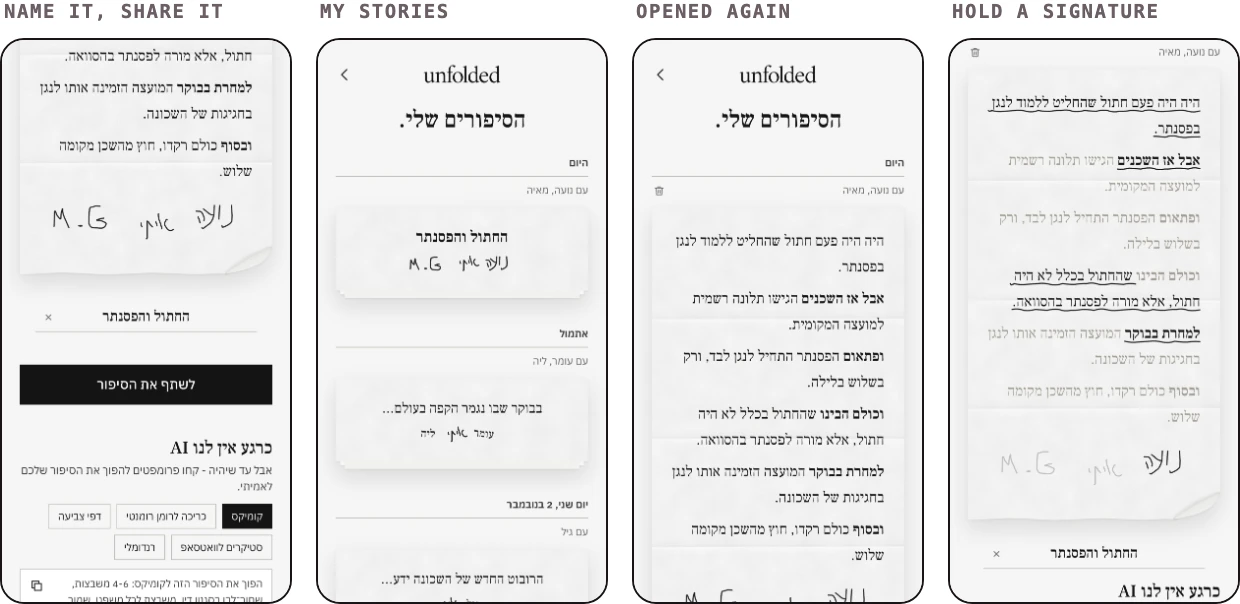
The end screen is the payoff: one sheet of paper with the whole story, signed by everyone who wrote it, with the hand-over points in bold. Players can name their copy, share it as a picture, and find it later in My stories, sorted by day.
A small reward for people who linger: hold a line, and the writer's words stay dark while their signature gets circled in pen.
The story ends as a signed sheet you can name, share and come back to.
How it's built
I designed and built both parts myself: the game, and the landing page that introduces it.
The game: plain JavaScript, Socket.IO, WebGL, Supabase. The landing page: Astro, GSAP, design tokens, Vercel.
The game play.unfolded-game.com ↗ (opens in a new tab)
- HTML, CSS, JavaScript No framework: a small, fast app that runs in the phone's browser, with nothing to install.
- Node.js, Express, Socket.IO Real-time multiplayer: turns, typing dots and one shared story across every phone in the room.
- WebGL The paper fold, built from scratch: the sheet really bends and rolls up, with a flat fallback.
- Canvas The story as a share picture, and photo avatars.
- Supabase Google sign-in, and saved stories that follow you between phones.
- Hebrew and English Right-to-left first, English rewritten at /en. Reduced motion respected.
- Render, Playwright Hosted on Render; tested with scripted multi-phone games in Chrome and Safari engines.
The landing page unfolded-game.com ↗ (opens in a new tab)
- Astro, TypeScript A static, fast page built from components.
- GSAP, ScrollTrigger Scroll-driven storytelling, with a reduced-motion version.
- Design tokens Plain CSS with tokens for colour, type and spacing, no Tailwind, plus a public design system page (opens in a new tab).
- Content collections All copy lives in JSON, separate from the components, so words change without touching layout.
- Git, Vercel Shipped from Git and deployed on Vercel.
Working with AI
I built unfolded with Claude Code. AI wrote the code and gave me options fast; my job was deciding what to keep, and real games were how I decided.
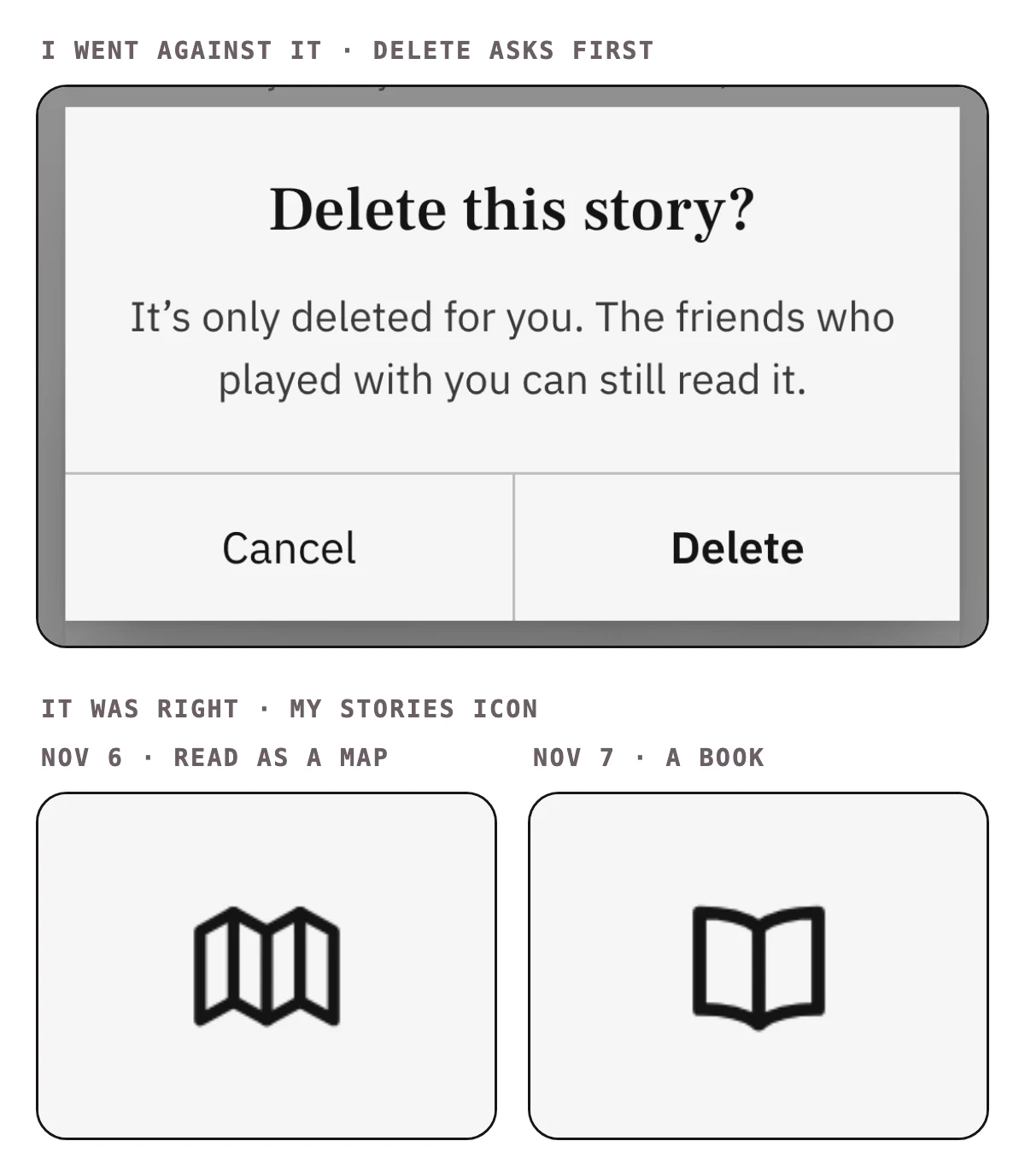
Sometimes I went against its advice. It said deleting a story didn't need a confirmation, since there's an undo. I kept the confirmation: the undo disappears fast, and even I, the designer, expected to be asked.
Sometimes it was right. It warned that my folded-strip icon could read as a map. I was too smitten with it to listen: it reminded me of folded paper, and I really wanted it to work. In real use, people saw a map, not paper. So I switched to a book, and learned to notice when I've fallen in love with an idea.
AI made options fast; real games decided which ones stayed.
Your turn
unfolded is a passion project, not a business. I'm not planning to monetize it; I just like making people laugh. So far it's been tested at real game nights with friends, where I could watch every round. The next step is testing at a larger scale, with analytics, to learn how strangers play when I'm not in the room.
So grab two friends and play a round, or try it alone with two pretend players. If something feels off, or a story made you laugh, tell me. I'm always up for more feedback.
A passion project, live and free. Next: larger-scale testing with analytics. Play a round and tell me what happened.
Try a round alone (opens in a new tab)
Got friends nearby? Play together (opens in a new tab), then tell me how it went.